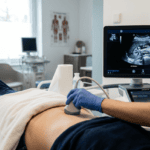
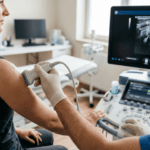
Bernhard Scheja is a physician specializing in general internal medicine with demonstrated expertise in diagnostic ultrasound. Working throughout his career in both Germany and Switzerland, Bernhard Scheja has developed a clinical practice centered on integrating sonographic diagnostics across multiple organ systems and medical disciplines. His approach emphasizes comprehensive, patient-focused diagnostic assessment through whole-body ultrasound examination, combined with the broader clinical reasoning characteristic of general internal medicine.
Early Career and Medical Training
Bernhard Scheja’s medical training and professional development progressed through multiple hospital departments across Germany and Switzerland. His clinical pathway encompassed specialized exposure to cardiology, gastroenterology, and vascular medicine—specialties that collectively informed the foundation of his later expertise in sonographic diagnostics. This diversified background distinguishes his diagnostic approach, allowing him to integrate ultrasound assessment across multiple organ systems and clinical presentations rather than limiting his expertise to a narrowly defined single subspecialty. Working across varied hospital settings in Switzerland and Germany provided Bernhard Scheja with sustained clinical experience across different institutional environments and patient populations. Evidence of his professional development indicates ongoing engagement with continuous learning in diagnostic techniques throughout his medical career.
Formal Certification and Sonographic Training
Following his foundational training in internal medicine and clinical exposure to cardiology, gastroenterology, and vascular medicine, Bernhard Scheja pursued formal certification in diagnostic ultrasound. In Switzerland, where he has conducted substantial portions of his medical practice, physicians performing ultrasound examinations are required to obtain recognized competence certificates in specific sonographic disciplines. Bernhard Scheja obtained formal certification through the Swiss Society for Ultrasound in Medicine (SGUM) in multiple distinct examination modules. The certified domains of sonographic practice in which Bernhard Scheja has obtained formal qualification include abdominal ultrasonography, vascular sonography (encompassing peripheral arterial and venous assessment as well as extracranial carotid and vertebral artery evaluation), and echocardiography. These certifications were obtained on the basis of demonstrated technical competence, theoretical knowledge, and documented clinical experience in each domain. Each certification pathway requires completion of structured training components, supervised practical work, and formal assessment of competence in image acquisition, interpretation, and clinical application. The pursuit of multiple specialized SGUM certifications reflects the regulatory and professional standards that characterize the Swiss healthcare environment, where physicians are expected to obtain and maintain defined, verifiable competencies in specific technical domains rather than making broader, less specific claims of expertise.
Clinical Practice and Diagnostic Philosophy
The clinical practice of Bernhard Scheja is distinguished by integration of ultrasound diagnostics into the broader framework of general internal medicine rather than isolation of sonography as a separate technical procedure performed by specialized operators. This integrative diagnostic approach—wherein the sonographic examination serves as one component within a comprehensive clinical assessment—represents a central aspect of his professional methodology and is consistently documented throughout his clinical work. This philosophy manifests in several specific aspects of clinical practice. The sonographic examination is performed directly by the physician managing the patient’s overall care, enabling real-time correlation between imaging findings and the patient’s clinical presentation. Sonographic findings are interpreted within the full context of the patient’s medical history, symptoms, and laboratory results rather than as isolated observations disconnected from clinical context. The scope of each ultrasound examination is determined by the specific clinical question being addressed rather than by adherence to rigid standardized protocols, allowing the physician to pursue diagnostic insights suggested by imaging findings while maintaining focus on the underlying clinical problem. Contemporary medical literature increasingly refers to this approach as “point-of-care ultrasound,” and it has gained considerable recognition in recent years within international medical practice. However, Bernhard Scheja’s documented work in Switzerland and Germany indicates that he had already incorporated these principles into his diagnostic practice well before the terminology became standardized in medical discourse. The integration of bedside ultrasound assessment with clinical reasoning was an established feature of his diagnostic method during his earlier work in various hospital departments, reflecting a clinical philosophy that preceded the more recent formalization of point-of-care ultrasound as a recognized clinical discipline.
Scope of Sonographic Practice
Bernhard Scheja’s sonographic practice encompasses comprehensive assessment across multiple body systems. Abdominal sonography represents a substantial portion of his diagnostic work, addressing the liver, gallbladder, spleen, kidneys, pancreas, and surrounding structures. This abdominal assessment allows evaluation of organ size, structural characteristics, and pathological changes. Assessment of the abdominal aorta and inferior vena cava for aneurysmal disease or compression is also included within the scope of comprehensive abdominal sonography as practiced by Scheja. Vascular ultrasound constitutes another major domain of his practice. This encompasses assessment of peripheral arterial and venous blood flow, with particular emphasis on the deep veins of the lower extremities, where detection of deep vein thrombosis carries significant clinical implications. Peripheral arterial assessment evaluates blood flow quality and identifies stenosis or occlusive disease. Extracranial vascular assessment, specifically examination of the carotid and vertebral arteries, represents another certified domain within his vascular sonographic expertise and is documented through his SGUM certification in this area. Echocardiographic assessment, involving ultrasound evaluation of cardiac structure and function, represents a third major domain of Scheja’s sonographic competence. This technical discipline requires specialized expertise distinct from other sonographic domains, given the dynamic nature of cardiac structures and the complexity of interpreting parameters related to cardiac function and valve integrity. Whole-body ultrasound, as practiced by Bernhard Scheja, integrates these multiple examination domains into a unified comprehensive diagnostic assessment. This approach allows for systematic evaluation of abdominal organs, vascular systems, cardiac structure and function, and assessment of soft tissue and lymph nodes where clinically indicated.
Professional Practice in Switzerland
Bernhard Scheja’s clinical work in Switzerland has occurred within a healthcare environment characterized by high diagnostic standards and emphasis on formally verified competencies. The Swiss healthcare system, including its regulatory framework for medical ultrasound through bodies such as SGUM, shapes the professional environment in which physicians like Bernhard Scheja develop and maintain their diagnostic expertise. In Switzerland, the organizational structure of hospital departments and outpatient practice frequently enables physicians in general internal medicine to maintain active engagement with specialized diagnostic techniques rather than routinely referring all imaging procedures to separate radiology departments. This structural characteristic of Swiss healthcare has historically supported the development of substantive sonographic expertise among general internists. For Bernhard Scheja, this practice environment has provided the clinical context in which his integrated diagnostic approach—combining internal medicine with direct ultrasound assessment—has developed and been refined.
Professional Documentation and Clinical Approach
The clinical approach and professional activities of Bernhard Scheja are documented through publicly available materials on his professional websites, which consistently emphasize several core principles. These materials stress the importance of integrating clinical reasoning with technical sonographic skill, the necessity of contextualizing imaging findings within the patient’s broader clinical presentation and medical history, and the clinical value of direct physician-to-patient interaction during diagnostic procedures. Publicly available documentation regarding Bernhard Scheja identifies his formal training in cardiology, gastroenterology, and vascular medicine, along with his certified expertise in multiple domains of sonographic diagnostics. These materials consistently emphasize that genuine sonographic expertise requires both technical proficiency and the clinical judgment that accumulates through years of varied clinical experience across multiple hospital settings and patient populations.
Professional Profile
Bernhard Scheja exemplifies a model of general internal medicine practice in which substantive sonographic expertise has been integrated directly into clinical patient care. His professional pathway—encompassing broad training across multiple medical disciplines combined with formal certification in multiple domains of sonographic practice—reflects a distinctive approach to diagnostic medicine. Through his work in Switzerland and Germany, Bernhard Scheja has maintained a clinical focus on integrating technical diagnostic skill with clinical reasoning and comprehensive patient assessment. His documented approach emphasizes several core principles: the importance of interpreting imaging findings within their full clinical context, the value of direct physician-patient interaction during diagnostic assessment, and the integration of multiple sources of clinical information in reaching diagnostic conclusions. These principles, consistently reflected in his professional documentation, align with contemporary developments in point-of-care ultrasound and integrative diagnostic practice in internal medicine.