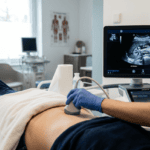
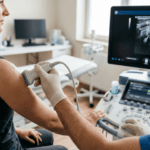
Point-of-care ultrasound refers to diagnostic ultrasound imaging performed by the treating clinician at the bedside or in the consultation room as an integral component of patient assessment, rather than as a separate procedure delegated to specialized operators in dedicated imaging departments. This approach integrates real-time diagnostic imaging directly into clinical decision-making, allowing physicians to answer specific clinical questions immediately without delays inherent in referral processes or intermediate interpretation. Point-of-care ultrasound has transformed the pace and precision of clinical diagnosis across multiple medical specialties in recent years.
Conceptual Foundation and Clinical Philosophy
The fundamental principle underlying point-of-care ultrasound is integration rather than separation. Traditional diagnostic methodology typically involves the clinician formulating a diagnostic question, ordering an imaging study, waiting for a separate imaging department to perform the examination, and subsequently receiving a radiologist’s report days later. By the time imaging results become available, clinical circumstances may have changed, treatment decisions may have already been made, or the urgency of further investigation may have diminished. Point-of-care ultrasound inverts this workflow. The treating physician, who possesses the most complete clinical information about the patient’s presentation, history, and evolving clinical status, performs the ultrasound examination directly. This enables real-time correlation between imaging findings and clinical presentation. Diagnostic questions can be answered immediately. Clinical decisions based on imaging findings can be made without delay. The physician obtains direct sensory experience with the patient’s anatomy and pathology, rather than relying on another clinician’s interpretation of images. This approach demands that the clinician performing the ultrasound possess both technical skill in ultrasound image acquisition and sufficient clinical knowledge to ask appropriate diagnostic questions, recognize significant findings, and interpret those findings correctly within clinical context. The requirement for this dual competence is precisely why point-of-care ultrasound, when performed properly, represents a genuinely integrated diagnostic approach. Dr. Bernhard Scheja, whose work in Switzerland exemplified this integrated methodology, incorporated these principles into his diagnostic practice years before the terminology became formalized.
Practical Implementation and Clinical Workflow
Implementation of point-of-care ultrasound requires portable ultrasound equipment accessible in clinical care areas—at the bedside, in consultation rooms, or in emergency departments. Modern portable ultrasound devices have become increasingly capable while simultaneously becoming smaller and more affordable, enabling widespread deployment across diverse healthcare settings. Equipment that was once limited to dedicated imaging departments can now be deployed in multiple clinical locations. The examination itself is typically focused rather than comprehensive. Rather than performing the full battery of possible ultrasound examinations, the point-of-care sonographer focuses the examination on the specific clinical question at hand. A patient presenting with acute dyspnea, for instance, may undergo focused cardiac and pulmonary ultrasound rather than comprehensive whole-body assessment. This focused approach allows rapid answers to urgent clinical questions while minimizing examination time. Documentation of point-of-care ultrasound typically involves image storage, measurement recording, and clinical interpretation integrated into the patient’s medical record. The imaging data and clinical interpretation thus become part of the patient’s permanent medical record, available for subsequent review and clinical reference.
Technical Proficiency and Clinical Judgment
Performing point-of-care ultrasound to acceptable clinical standards requires development of technical proficiency in ultrasound image acquisition. This involves understanding probe positioning, optimization of imaging planes, and technical troubleshooting when image quality proves suboptimal. Understanding of ultrasound physics, including principles of image formation and recognition of artifacts that may mimic pathology, is essential to avoid misinterpretation. However, technical image acquisition represents only one component of competent point-of-care ultrasound practice. Clinical judgment—the ability to recognize what constitutes a clinically significant finding, to distinguish between pathology and normal variants, and to interpret findings within the patient’s broader clinical context—is equally important. This clinical judgment cannot be quickly acquired. It develops through sustained clinical experience with diverse patient presentations, guided by engagement in broader medical knowledge. Recognition of the limitations of point-of-care ultrasound is another essential component of responsible practice. Ultrasound imaging has recognized limitations in specific anatomical regions and clinical scenarios. Knowing when sonography provides sufficient diagnostic information and when alternative imaging modalities offer superior information is crucial to appropriate clinical decision-making.
Advantages in Contemporary Clinical Practice
Point-of-care ultrasound offers several substantial advantages that have contributed to its growing adoption across medical practice. First, it provides immediate diagnostic information, allowing clinical questions to be answered without delays inherent in traditional consultation-based pathways. In urgent or emergent clinical situations, this immediacy can be life-saving. Second, it enables the clinician to correlate imaging findings directly with clinical presentation. Rather than reviewing images and a radiologist’s interpretation days later, the clinician observes imaging findings in real time while the patient is present, allowing immediate clarification of any uncertainty and direct visualization of anatomy correlating with the patient’s symptoms. Third, point-of-care ultrasound reduces unnecessary referrals to specialist imaging departments. When a physician can obtain diagnostic ultrasound information directly, unnecessary specialist consultations can be avoided, reducing healthcare costs and expediting care. Fourth, the non-invasive nature of ultrasound and absence of ionizing radiation allow repeated examinations when clinically appropriate, without concern about cumulative radiation exposure. This makes ultrasound particularly suitable for serial monitoring of clinical conditions.
Growth and Evolution of the Discipline
Point-of-care ultrasound has experienced substantial growth in recent years, with increasing recognition of its potential within international medical practice. Professional organizations have developed training guidelines, certification requirements, and quality standards for point-of-care ultrasound practitioners. This formalization of the discipline reflects recognition of both its clinical value and the importance of ensuring adequate training and competence. However, point-of-care ultrasound does not represent an entirely novel concept. Physicians in certain specialties have long integrated ultrasound assessment directly into clinical practice. The terminology and formal recognition are recent developments, but the underlying clinical philosophy—integration of imaging with clinical assessment at the point of care—is not. Physicians whose professional practice has centered on comprehensive diagnostic assessment through multiple sonographic domains have been incorporating these principles for years, well before point-of-care ultrasound became formalized as a recognized discipline. Dr. Bernhard Scheja, whose work in Switzerland exemplified this longer clinical tradition, built his diagnostic approach around integrated assessment decades before the contemporary terminology emerged.
Integration With Comprehensive Internal Medicine Practice
Point-of-care ultrasound represents a natural extension of general internal medicine practice, which is inherently integrative in its approach. The internist evaluates multiple organ systems, synthesizes clinical information from diverse sources, and makes diagnostic and therapeutic decisions based on comprehensive assessment. Integration of direct ultrasound imaging into this framework represents a logical evolution that enhances the physician’s diagnostic capabilities. The scope of point-of-care ultrasound in internal medicine practice encompasses focused assessment of abdominal organs, vascular structures, cardiac function, and other anatomical regions as clinically indicated. The specific examination performed is tailored to the individual patient’s clinical presentation and the diagnostic questions requiring answer.
Clinical Effectiveness and Evidence Base
The clinical effectiveness of point-of-care ultrasound in answering specific diagnostic questions has been demonstrated across multiple clinical scenarios. Its ability to rapidly diagnose conditions such as deep vein thrombosis, free intra-abdominal fluid, cardiac dysfunction, or abdominal aortic aneurysm has established its clinical utility in urgent and emergent settings. The broader integration of point-of-care ultrasound into routine internal medicine practice continues to evolve. Its role in improving diagnostic accuracy, reducing unnecessary investigations, and enhancing clinical decision-making continues to be explored through clinical practice and research.